
TIMBER BRIDGES
..speed, strength, sustainability, warmth
Mass Timber is Strong, Aesthetic, & Sustainable
Mass timber doesn't make you choose. It carries the load, it looks like it was meant to be seen, and it stores carbon instead of releasing it — structure, aesthetic, and sustainability, all in the same beam.
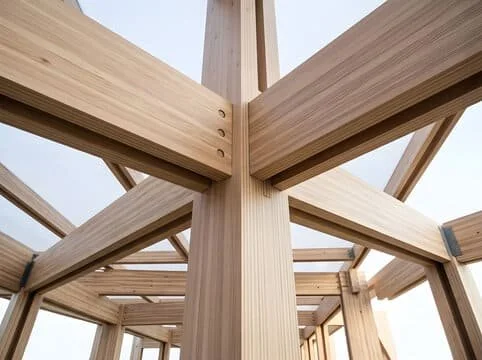
Strength of Mass Timber
Mass timber's real advantage isn't just that it's strong — it's how much strength it carries relative to its weight. Glulam and CLT deliver load capacity that rivals steel and concrete, but at a fraction of the mass, which means less dead load bearing down on everything below the structure. That lighter footprint translates directly to smaller, less expensive foundations — a real advantage on tight sites, soft soils, or anywhere oversized footings would eat into budget and schedule. And that strength doesn't fade with time the way people assume wood might: properly engineered and protected mass timber holds its structural performance for decades, aging the way heavy timber always has — solid, dimensionally stable, and built to outlast the building around it.
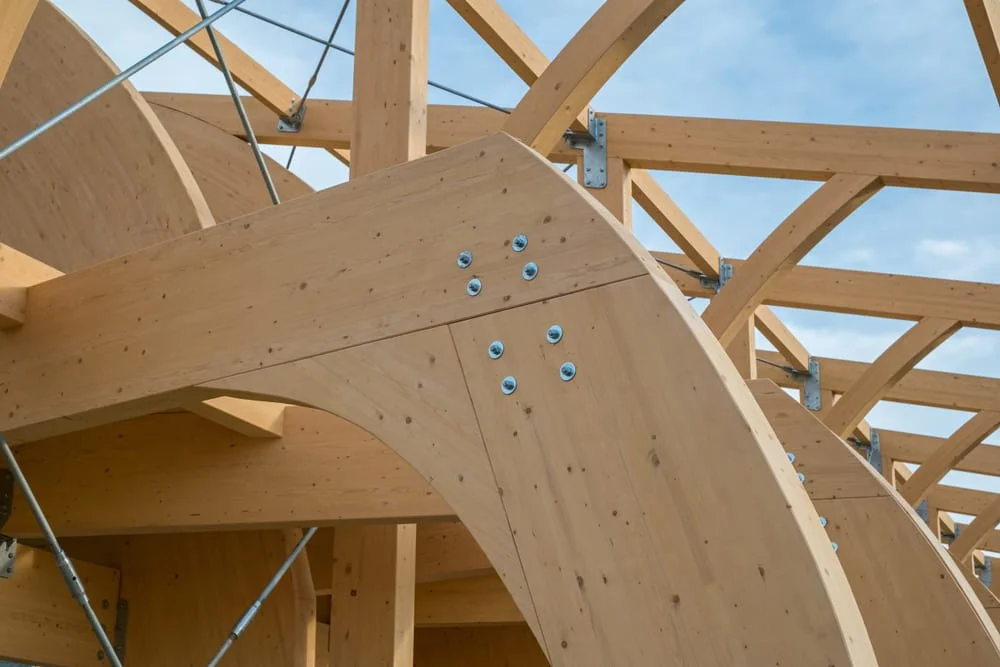
Mass Timber | Fire Performance and Decay Resistance
Mass timber's fire performance surprises people who assume "wood" means "flammable." Large-dimension glulam and CLT members char on the outside in a slow, predictable layer, and that char insulates the wood underneath — the structure retains its strength even as the outer surface burns, which is a fundamentally different behavior than the two-by-four framing most people picture. Building codes recognize this: mass timber structural members are engineered and tested to hold specific fire ratings, the same way steel and concrete are, and in many cases they perform more predictably in a fire than an unprotected steel frame, which loses strength quickly once it heats up. Decay is a separate question, and it's a solved one — glulam and CLT built for exposed or exterior use are manufactured with weather-resistant adhesives and pressure-treated where needed, protecting against rot, insects, and moisture damage over the long term. Properly detailed and protected, mass timber holds up structurally for decades, the same way heavy timber always has.
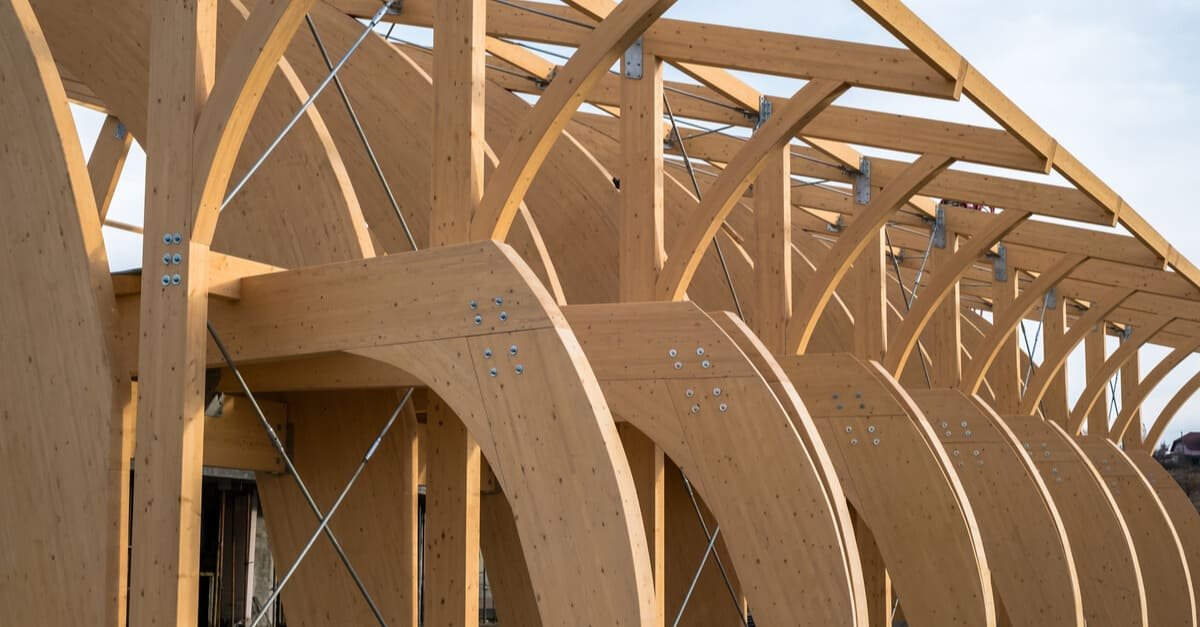
Mass Timber Aesthetics | Health and Productivity
Exposed wood isn't just a finish choice — it changes how people feel in a space. Research on biophilic design consistently links exposed timber interiors to improved workplace performance, including increased productivity and reduced absenteeism, and better academic achievement and cognitive development among students. Studies have measured the physiological side of it too: a year-long study of Austrian high-school students found lower stress, heart rate, and blood pressure in wood-based classrooms compared to conventional ones. It's a growing body of evidence pointing the same direction — mass timber doesn't just look calmer, it measurably makes the people inside it calmer. Naturally Wood Biophilicproducts
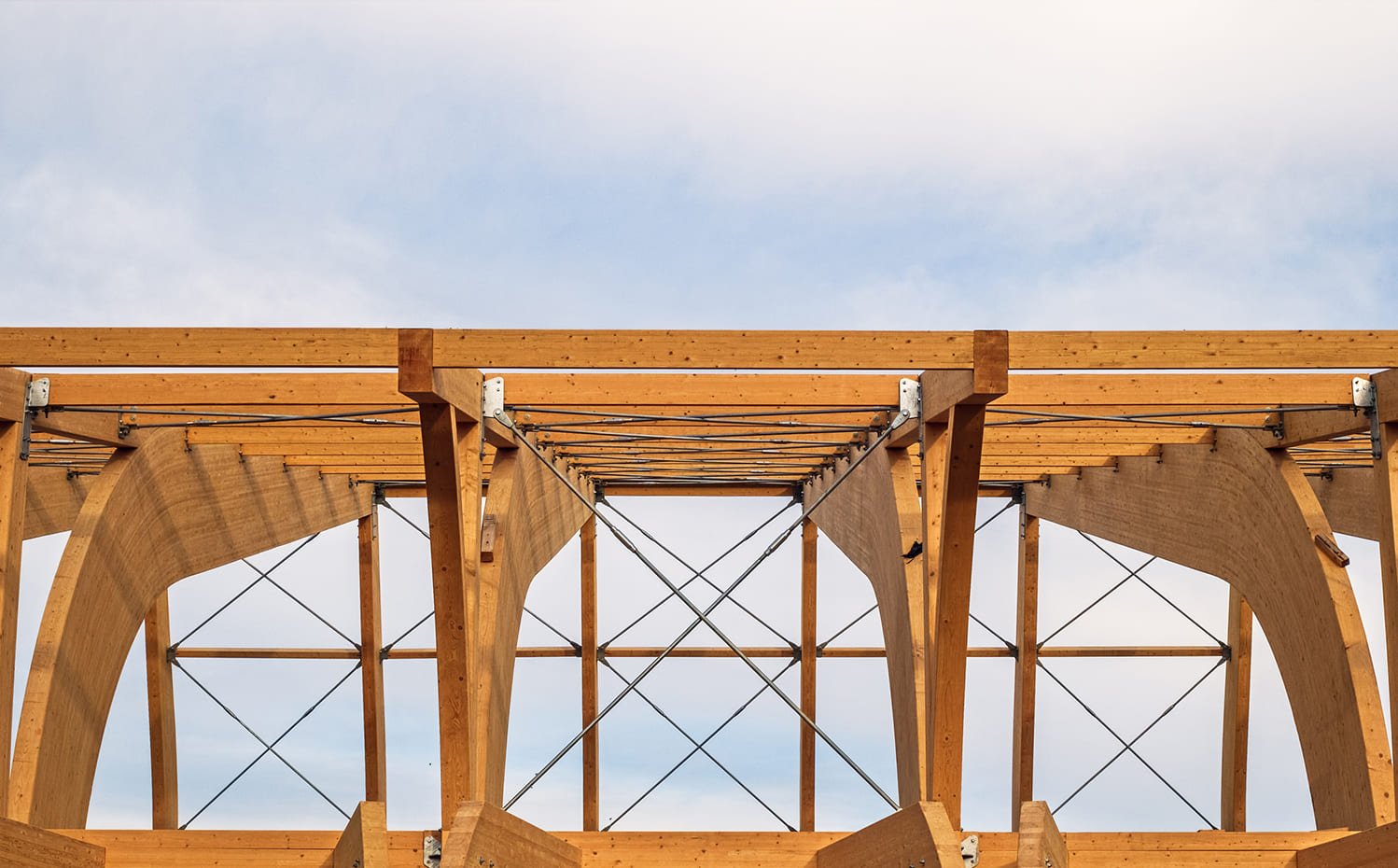
Sustainability of Mass Timber
Mass timber is sustainable in a way steel and concrete simply can't match: trees pull carbon out of the atmosphere as they grow, and that carbon stays locked in the wood for the life of the building instead of getting released back into the air. Manufacturing steel and concrete does the opposite — both are carbon-intensive to produce, adding emissions rather than storing them. Sourced from responsibly managed forests, mass timber turns a renewable resource into a building's structure, cutting embodied carbon significantly compared to conventional materials while still delivering the strength a serious structure needs.
Do you have a project?
If you have any questions, please..